

Ojo casino game selection
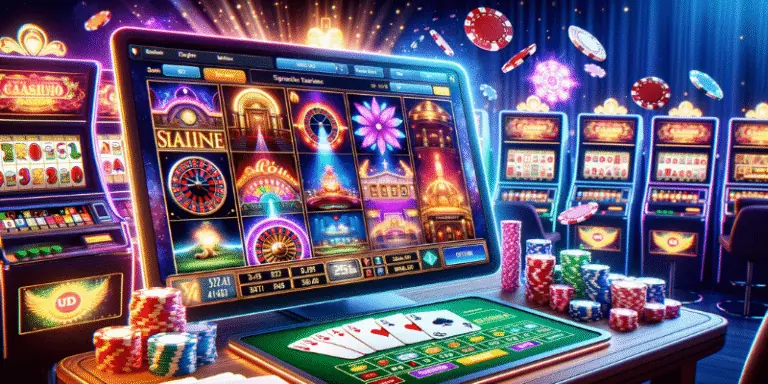
When I assess a casino’s games section, I’m not interested in headline numbers alone. A platform can advertise thousands of titles and still feel awkward in day-to-day use. What matters in practice is simpler: can I quickly understand what is available, separate the worthwhile content from filler, find the format I want, and open a title without friction? That is exactly the lens I’m using here for Ojo casino Games.
For UK players, this matters even more because convenience is only part of the story. A good games hub should also make it easy to identify licensed content, recognised software providers, clear categories, and features that help users make better choices rather than scroll endlessly. In my view, the real quality of a casino game library shows up not on the homepage banner, but after ten minutes of searching, filtering and comparing what is actually playable.
This article is focused strictly on the Games section at Ojo casino: how it is structured, which categories are usually available, how useful the navigation is, what kind of software mix players can expect, and where the weak spots may appear. I’m not treating this as a full casino review. The point here is practical value: whether the gaming area is genuinely easy to use and broad enough to satisfy different player types.
What players can usually find inside Ojo casino Games
The Ojo casino games section is generally built around the formats most UK users expect to see first: online slots, live casino titles, classic table options, jackpot content, and a smaller layer of instant-win or specialty products depending on current availability. That broad mix is important because it tells me the platform is not trying to rely on one vertical alone.
Slots are normally the largest part of the selection. That is standard across the market, but the difference lies in how much variety exists inside that segment. At Ojo casino, the practical question is not simply whether there are many slot titles, but whether the section includes a healthy spread of mechanics and volatility profiles. I look for branded releases, cluster-pay games, Megaways-style formats, bonus-buy restrictions where applicable under UK rules, and a mix of low, medium and high variance titles. A slot collection only becomes useful when it serves more than one type of player.
Live casino content is another core area. For many users, this is where a platform either feels current or dated. A modern live section should cover roulette, blackjack, baccarat and game-show style products, ideally from providers with stable streaming and recognisable interfaces. If the live area is too thin, the overall games section may still look large on paper while feeling narrow in actual use. Table game fans will get more out of this review after reading Ojo Casino bingo for real money players.
Ojo Casino roulette review matter for a different reason. They are often less visible in promotional material, but they remain essential for players who prefer lower visual noise, simpler rules, or stronger strategic familiarity. Digital blackjack, roulette and baccarat titles can offer faster sessions than live tables and may suit users who want less waiting between rounds.
Then there is the jackpot segment. This category tends to attract attention quickly, but I always treat it carefully. A casino can list a jackpot section that looks exciting while containing a limited number of genuinely distinct titles. The important thing is whether Ojo casino presents progressive jackpot options in a way that is easy to identify and compare, rather than burying them inside the broader slot mix.
Specialty content, if present, can include bingo-style products, scratchcards, instant wins or crash-inspired formats, though exact availability can vary. These games are not always central to the identity of the platform, but they can improve the usefulness of the overall library by giving players short-session alternatives.
How the gaming hub is usually organised in real use
In practical terms, a games section works best when it does two jobs at once: it helps new users discover content quickly, and it lets experienced players go straight to what they already know. Ojo casino typically needs to balance both. That means the structure of the gaming hub matters almost as much as the content itself.
Most players first encounter the section through broad category entry points such as slots, live casino, jackpots and table games. That is the expected starting layer, but the real test comes after that first click. If the internal layout is clean, users should be able to move deeper without feeling trapped in endless rows of thumbnails. If the layout is cluttered, even a strong library starts to feel repetitive.
One thing I always watch for is whether a casino separates featured content from the main browsing flow in a sensible way. Highlighting new releases, popular titles or editor picks can be useful. But if too much screen space is given to promoted content, the actual browsing experience becomes slower. In some game hubs, the “featured” rail keeps reappearing in slightly different forms, which creates the illusion of variety without adding real choice. That is one of the easiest ways a large catalogue loses practical value.
Another point is category overlap. The same title can appear under new games, popular games, slots, jackpots and provider pages at once. That is normal, but too much duplication can make the library feel larger than it really is. When I evaluate Ojo casino Games, I would pay close attention to whether the content feels genuinely broad or simply redistributed across multiple shelves.
A well-structured gaming area should also make room for provider-led browsing. Some users do not search by genre at all; they go directly to studios they trust. If Ojo casino supports that behaviour clearly, it improves the section for informed players and shortens decision time.
Which game categories matter most and how they differ
Not all categories serve the same purpose, and players often waste time when they treat them as interchangeable. At Ojo casino, understanding the difference between the main formats helps users choose more efficiently and avoid frustration.
Slots are usually the broadest category and the easiest place to browse casually. They suit players who want visual variety, different bonus structures and a wide range of stake levels. The downside is that slot sections can become crowded very quickly. If there are weak filters or too many near-identical releases, the convenience drops fast.
Live casino appeals to users who want a more social or immersive format. The presence of real dealers, scheduled tables and streamed gameplay changes the pace completely. This category is often more engaging, but it also depends more heavily on connection stability, table availability and clear betting limits. For some players, live content is the most important sign of a mature casino platform. For others, it is secondary because it is slower than standard RNG titles.
Table games are usually the most practical category for players who know exactly what they want. A digital roulette or blackjack title can be opened quickly and played without the extra waiting time that comes with live tables. These games are also easier to compare because their differences tend to be mechanical rather than theatrical.
Jackpot titles are category-driven rather than experience-driven. People choose them for the prize structure first and the gameplay second. That distinction matters. A strong jackpot section is useful if it clearly labels progressive mechanics, entry stakes and provider details. Without that clarity, the category becomes more of a marketing label than a meaningful tool.
Instant-win or specialty formats are usually about speed. They suit short sessions and players who do not want to commit to longer rounds or more complex interfaces. In a balanced games section, these titles add flexibility. In a weakly curated one, they can feel like filler.
The practical takeaway is simple: users should not judge Ojo casino Games by quantity alone. The value of the section depends on whether each core category is deep enough to be useful, not merely present as a checkbox.
Slots, live tables, jackpots and other formats: what to expect from the mix
For most users, the first question is whether Ojo casino covers the major gaming formats well enough to support regular use. In my view, the answer depends less on raw count and more on balance. A platform can have a huge slot-heavy offering and still feel incomplete if live tables are thin or table games are buried.
In a healthy mix, slots should include more than standard five-reel releases. I would expect to see classic fruit-machine inspired titles, feature-heavy video slots, branded releases, cascading mechanics, expanding reels, and games with different RTP and volatility profiles where disclosed. This matters because players do not all use slots the same way. Some want long sessions with lower swings; others actively seek high-variance formats with larger but less frequent bonuses.
Live casino should ideally cover the essentials well before trying to impress with novelty. Reliable roulette and blackjack tables are more important than a long list of game shows if the basics are underdeveloped. A common weakness in many online casinos is that the live section looks broad at first glance, but most users end up rotating between a small number of active tables with acceptable limits and stable streams.
The table games area should not be overlooked. It often reveals how seriously a casino treats players who prefer function over presentation. If Ojo Ojo Casino bonus offers guide for UK players multiple versions of roulette, blackjack and baccarat with rule differences or side-bet variations, that improves practical choice. If the section is only a token add-on, experienced table players will notice immediately.
Jackpot content can add excitement, but I would advise users to inspect it more critically than other categories. Some jackpot pages collect genuine progressive network titles. Others simply gather “big win” slots under a loose label. That distinction affects expectations. If a player is specifically chasing progressive mechanics, they should verify that the category is not just a themed subset of ordinary slot content.
One memorable pattern I often see in casino game hubs also applies here as a useful warning sign: the catalogue can become “wide at the entrance, narrow in the corridor.” In other words, the first screen suggests endless choice, but once you start filtering by provider, feature or format, the meaningful pool becomes much smaller. That is exactly why the browsing tools matter so much.
Finding the right title: navigation, search and browsing comfort
A games section becomes genuinely useful when it saves time. That sounds obvious, but many casino platforms still force players into slow scrolling even when they claim to offer advanced discovery tools. At Ojo casino, the practical quality of the search and navigation system is one of the most important parts of the overall experience.
The search bar should do more than recognise exact game names. In a strong setup, it should also handle partial titles, provider names and common spelling variations. This is particularly important for users who know the studio but not the exact name of a release. If search only works with precise input, the system is less helpful than it looks.
Category browsing should also feel logical rather than decorative. A useful layout lets players move from broad sections into narrower groups without resetting the page or losing context. If every click leads back to a top-level listing with endless tiles, the browsing flow becomes tiring. That issue matters more than many players expect because it directly affects how often they try new content.
Another detail worth checking is whether Ojo casino makes room for “recently played” or “continue playing” style shortcuts. These are small features, but they have a real effect on repeat usability. A player who returns to the same titles frequently should not have to search from scratch every time.
I would also pay attention to loading behaviour during browsing. Some game pages feel smooth until filters are applied, then become noticeably slower. That kind of delay changes the overall impression of the casino more than flashy design ever will. Players tend to forgive a plain interface if it responds quickly. They rarely forgive a beautiful one that wastes their time.
Software providers and in-game features worth checking first
Provider mix is one of the clearest indicators of whether a games section has depth or just volume. When I look at Ojo casino Games, I want to see whether the platform relies on a few dominant studios or offers a broader software spread that supports different tastes and mechanics.
For UK players, well-known providers matter because they often signal consistency in interface quality, mathematics, mobile optimisation and feature design. A strong provider roster usually means better coverage of established slot formats, trusted live products and familiar table rules. It also reduces the risk of a catalogue padded with forgettable content from weak studios.
That said, more providers do not always mean a better experience. Too many studios with overlapping styles can create repetition rather than variety. If ten providers all contribute visually similar video slots with near-identical bonus structures, the library grows in size but not in usefulness. This is one of the most common gaps between advertised variety and real player value.
Beyond the studio names, users should check specific game features that affect session quality:
- Volatility profile where visible, especially for slot players managing bankroll swings.
- RTP information or any transparency around theoretical return.
- Bet range suitability for low-stake and mid-stake users.
- Autoplay limitations and other UK compliance-related restrictions.
- Bonus mechanics such as free spins, respins, hold-and-win features or expanding symbols.
- Rule variations in blackjack, roulette and baccarat titles.
- Live table limits and seat availability where relevant.
One practical observation I always make: a provider list looks impressive on paper, but what really matters is whether those studios are easy to browse. If provider pages are hidden or incomplete, the value of that software diversity drops immediately. A good games section should not make informed players work hard to use information the casino already has.
Demo mode, filters, sorting and other tools that improve real usability
Useful browsing tools are not decorative extras. They shape whether a player can test the platform intelligently or ends up choosing at random. In the Ojo casino games area, features like demo access, sorting and filtering can make the difference between a catalogue that feels manageable and one that feels bloated.
Demo mode is one of the first things I would check. For slots and some RNG table titles, free-play access allows users to test mechanics, pace, volatility feel and interface quality before staking real money. This is especially valuable for new releases and unfamiliar providers. If demo availability is limited, the practical cost of exploring the library goes up because every experiment requires a deposit-backed decision.
Filters should ideally include at least category and provider, and preferably also themes, popularity, new releases or jackpot status. More advanced filtering is useful only if it works consistently. I have seen casinos offer many filter labels that barely narrow the results. When that happens, the system looks sophisticated but does not actually help the user.
Sorting is often underestimated. Being able to arrange titles by popularity, newest, alphabetical order or featured status can save a surprising amount of time. It also reveals whether the platform is trying to help discovery or simply push promoted content.
Favourite lists are another practical tool worth checking. Players with regular habits benefit from being able to save titles for quick return. Without this function, repeat sessions become slower and the library feels less personal.
Recently viewed or recently played rows can also improve usability, especially in a large slot environment where game names are easy to forget but thumbnails look frustratingly similar. That may sound like a small issue, but in oversized catalogues it becomes a real navigation problem.
Here is a concise view of which tools matter most and why:
| Feature | Why it matters | What to check |
|---|---|---|
| Demo mode | Lets players test titles without financial commitment | Whether it is widely available or limited to selected releases |
| Provider filter | Helps experienced users go directly to trusted studios | How complete and accurate the provider list is |
| Search | Reduces scrolling and speeds up access | Whether it recognises partial names and providers |
| Sorting tools | Makes discovery faster and more transparent | Whether sorting changes results meaningfully |
| Favourites | Improves repeat use of the games section | How easy it is to save and reopen preferred titles |
A second memorable observation here: the best casino libraries often feel smaller than they are, because the tools make them easier to control. The worst ones feel larger than they are, because the user has to fight the interface to find anything specific.
How smooth the game launch process feels in everyday use
Browsing quality matters, but launch quality is where players feel the platform most directly. A game can look easy to find and still become frustrating if it opens slowly, fails to load properly, or pushes the user through too many intermediate steps.
At Ojo casino, the ideal experience should be straightforward: select a title, open it in a stable window, see clear stake controls, and begin without unnecessary redirects. If the games section is well built, the transition from catalogue to gameplay should feel almost invisible.
In reality, there are a few points users should watch closely. The first is loading time. Some titles open quickly while others depend on heavier provider frameworks or live-stream connections. If delays are common, the platform starts to feel less polished no matter how strong the content mix is.
The second is session continuity. If a user exits a title and returns to browsing, the page should preserve position reasonably well. When a casino resets the user to the top of the page after every exit, it creates avoidable friction. This is one of those design flaws that sounds minor until you use the site repeatedly.
The third is clarity inside the game frame. Stake settings, information menus, help files and return-to-lobby options should be visible without confusion. In live casino especially, players also need transparent table limits and easy recognition of seat availability or table status.
From a practical standpoint, the best gaming experience is not the one with the most visual impact. It is the one that stays predictable. Players should know what will happen when they open a title, how quickly it will respond, and how easily they can move back to browsing. Predictability is underrated, but it is central to long-term usability.
Where the games section may fall short or lose value
No casino game library is perfect, and the weak points are often more revealing than the strengths. With Ojo casino Games, the possible limitations are not necessarily about lacking major categories. More often, the risk lies in how those categories are presented and maintained.
One common issue is content repetition. A large slot section can contain many titles that feel functionally similar, especially if several providers contribute interchangeable feature sets. This creates visual abundance without delivering much extra choice.
Another potential weakness is overcrowded browsing. If the interface leans too heavily on endless grids and not enough on smart filtering, players may spend more time searching than playing. A big library only has value when users can reduce it efficiently.
Limited demo access can also reduce practical usefulness. Without free-play options, exploring unfamiliar games becomes more expensive and less informative. This affects casual users most, but even experienced players benefit from testing mechanics before committing real stakes.
Uneven category depth is another point to watch. A casino may cover slots thoroughly while offering only a basic live or table section. That does not make the games area bad, but it changes who it is truly suitable for.
Search inconsistency can quietly undermine the whole section. If users cannot reliably find games by title or provider, the value of a large library drops sharply. This is especially frustrating for players who revisit specific releases regularly.
There is also a more subtle issue: headline variety versus meaningful variety. A catalogue can look broad because it includes many themes, thumbnails and labels, while the underlying gameplay patterns remain narrow. That is why I always recommend checking not just how many titles Ojo casino lists, but how different they actually feel once you start comparing them.
Who is most likely to benefit from Ojo casino Games
Based on how a section like this is usually structured, Ojo casino Games is likely to suit players who want a mainstream UK-facing mix rather than a highly specialised niche platform. In practical terms, that means users who enjoy rotating between slots, live tables and a few classic table options are more likely to find it useful than players focused on one obscure format.
It should work best for:
- Players who want a broad mix of recognised casino formats in one place.
- Slot users who like browsing across different mechanics and providers.
- Live casino users who value access to core tables without needing a separate specialist site.
- Casual and mid-frequency players who benefit from clear categories and repeat-use tools.
It may be less suitable for:
- Players who want an unusually deep table-games environment with many rule variants.
- Users who rely heavily on demo mode if free-play access is limited.
- People who dislike large visual catalogues and prefer minimalist, highly curated interfaces.
The key point is that a games section does not need to satisfy every profile equally. What matters is whether Ojo casino is honest in practice about where its strengths really lie.
Practical tips before choosing games at Ojo casino
If I were advising a player using the Ojo casino games area for the first time, I would suggest a simple approach.
- Start with the provider filter, not just the main categories. It is often the fastest way to separate quality content from generic filler.
- Check whether demo mode is available before committing to unfamiliar slot titles.
- Compare live casino depth by looking at table variety and limits, not just the number of thumbnails.
- Use search for known titles, but test whether it handles partial names properly.
- Save favourites early if that function exists. It makes repeat sessions much smoother.
- Do not assume the jackpot section is fully progressive without checking the actual game type.
- Pay attention to repetition. If many titles feel similar, narrow your browsing by provider or mechanic.
One final practical note: if a games section feels tiring within the first few visits, that usually does not improve with time. Players adapt to good interfaces. They endure bad ones. That distinction is worth noticing early.
Final verdict on the Ojo casino Games section
My overall view is that Ojo casino Games has value when judged as a functional gaming hub rather than a headline number exercise. The section is most useful if you want access to the major casino formats in one place, especially slots, live dealer content and standard table options. Its strongest side is likely the breadth of mainstream choice and the ability to move between different styles of play without leaving the same platform.
The strengths, however, only matter if the navigation supports them. That is where players should be selective. Before using the section regularly, I would check how effective the search is, whether provider browsing is properly implemented, how much demo access is available, and whether the visible variety holds up once duplicate or near-identical titles are mentally stripped out.
In short, Ojo casino is best suited to users who want a broad, practical UK online casino games experience rather than an ultra-specialist environment. The catalogue can be genuinely useful if its filters, categories and launch flow work cleanly. The caution points are familiar but important: repeated content, possible imbalance between categories, and the gap between a large-looking library and one that is truly easy to use.
If I had to sum it up in one line, it would be this: the real quality of Ojo casino Games is not about how much it shows on the screen, but how quickly a player can turn that variety into a session that actually fits their preferences.
FAQ
How can an online slot be launched from the game lobby?
Open the Slots section, pick a slot title, and press Play. If the game offers a Demo mode, switch to Real money to start wagering. Some slots require a quick refresh of the lobby filters before the correct version appears.
What does Demo mode mean compared with real-money play in the game lobby?
Demo mode lets players practise the mechanics using virtual balance without wagering. Real-money play connects to the account balance and the game operates under the casino rules, including deposits and withdrawals if enabled.
When filtering the lobby for live casino tables, which options matter most?
Filter by game type such as Roulette, Blackjack, or Poker and by availability status. Provider selection can also narrow the list when multiple live dealer experiences are shown. After applying filters, open a table directly to confirm the lobby displays the intended rules and currency.
A beginner mistake often seen with crash games is what, and how can it be avoided?
Trying to open multiple crash sessions at once can create confusion about which game is active. A safer approach is to close the previous crash window before launching the next round. Checking the current round status and staying in a single active session helps keep control of timing.
If a game shown in the lobby is unavailable in the region or account, what should be done next?
Return to the lobby list and select another table or slot that displays as available for play. Try changing filters like currency, provider, or game type, since availability can differ by selection. For account-specific restrictions, sign in again and verify that the correct balance and status are shown. If access remains blocked, contacting support with the game name and section helps resolve the issue faster. Keeping to Demo mode can also allow testing mechanics while the access problem is checked.